
Well-Maintained Trails Will Help Make Philadelphia the Safest, Cleanest and Greenest Big City in the Nation
Authored By: Will Fraser and Pauline Berkowitz | Circuit Trails Coalition Maintenance Committee Chairs | January 14, 2026
This is a guest piece by Will Fraser, Clean Air Council Trails Program Manager, and Pauline Berkowitz, Friends of the Wissahickon Director of Capital Projects, chairs of the Circuit Trails Coalition Maintenance Committee.
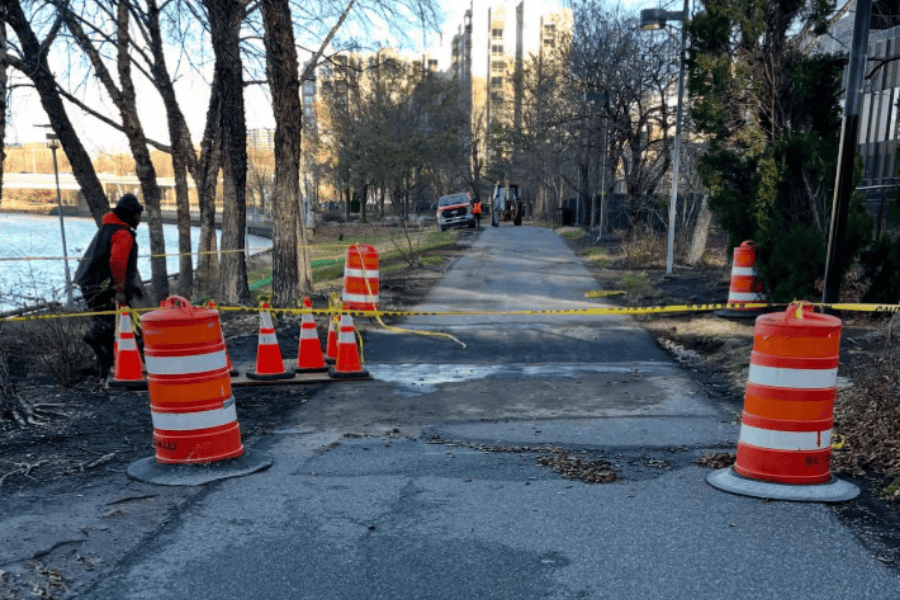
A recent sinkhole forced the closure of the Schuylkill River Trail between Race Street and JFK Boulevard is a stark reminder of how essential consistent trail maintenance and monitoring are for public safety. The Schuylkill River Development Corporation reported that a large cavity formed under the asphalt, triggering an emergency response to identify the cause and make repairs. Now, after 64 days, it’s been repaired, but incidents like this show the need for sustained investment to keep Philadelphia’s trails safe, clean and operational.
Philadelphia is home to roughly 80 miles of off-road trails that offer safe places to walk and bike, connecting neighborhoods to parks, transit, businesses, schools, and beyond. More than a third of these trails have been built since 2011, with more than 42 additional miles in development, as of 2024. Many of these routes are part of the Circuit Trails, Greater Philadelphia’s expanding network of multi-use pathways used by people of all ages and abilities. These trails span every part of the city and across socioeconomic boundaries – yet their long-term value depends on consistent, high-quality maintenance.
Routine tasks–mowing grass, removing downed trees, trimming plant growth, plowing snow, patching cracks in asphalt, keeping drains clear, removing trash and upkeeping amenities–are essential to providing safe and accessible trails as long-term community benefits. When trails fall into disrepair they become more difficult to access, feel less safe and less welcoming, diminishing community well-being.
View this post on Instagram
The need is urgent. Trail use has climbed since the pandemic, with an estimated 3 million annual visits. Severe weather events are becoming more frequent and damaging. And according to the Trust for Public Land’s 2025 ParkScore®, the City allocates a budget of $82 per person to fund Philadelphia Parks and Recreation (PPR), substantially less than the national median of $116 per person.
Currently, Philadelphia’s trails are largely maintained by PPR Operations staff, but underfunding leaves no system to monitor or address issues in real time, resulting in maintenance only on an as-needed basis. Teams of volunteers on the Wissahickon have identified issues early — including a forming sinkhole — proving how essential extra eyes are for keeping trails safe and accessible.
Philadelphia’s park and trail system is one of its greatest assets, contributing to our city’s vibrancy and desirability as a destination for tourism and for people to live. Well-known destinations like the Schuylkill River Trail and the Wissahickon, along with local gems like the Tacony Creek, Pennypack, and Cobbs Creek Trails play significant roles in Mayor Cherelle Parker’s goal of making Philadelphia a safe, clean and green city.
Recognizing these benefits – and the challenges facing maintenance – the city completed the Philadelphia Trail and Sidepath Maintenance Plan in 2022, which sought to understand existing practices, challenges, costs, and needs. The top recommendation was clear: make the case for dedicated maintenance funding.
Philadelphia is at a pivotal moment. As the nation prepares to celebrate America 250 in 2026, millions of visitors will look to Philadelphia’s public spaces to reflect the city’s identity and values. With strategic, dedicated investment, the city can ensure its trails remain clean, safe, and accessible to all. The benefits trails provide stand to increase as we grow a connected network across the region, and are an essential step toward fulfilling the vision of a truly safe, clean and green Philadelphia.